Carol
American WomanCarol, Rob Frazer’s wife, is defined by a combination of candor, insistence on privacy, and practical care. She is first seen within the couple’s university-owned apartment, where private domestic life presses against political upheaval; later, when fugitives need shelter, she rents a safe house and waits through the night for Jenny and Frazer to arrive. Her scenes make care tangible but never serene: it involves managing rooms, journeys, danger, and time, while leaving little room for quiet.
Home and Marriage
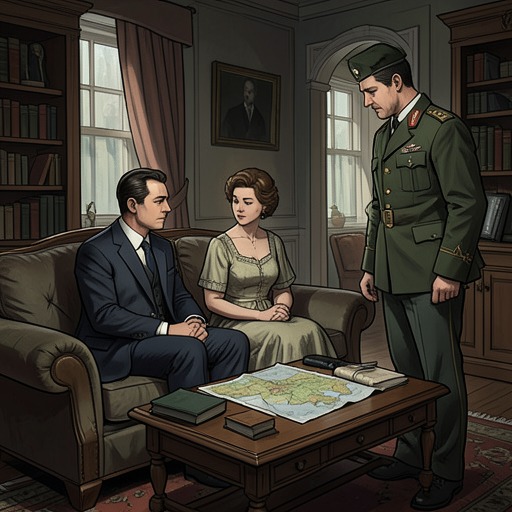
Carol and Frazer decide to keep the university-owned apartment, whatever legal or illegal means might be necessary. Its high ceilings, creaking French doors, and claw-footed tub suggest a spacious, appealing home, though its ownership is bound up with Frazer’s turbulent university employment. After student strikes and negotiations, the university hires him as athletic director; when he later hires a Black Muslim, world-ranked 800-meter runner as co-director, he is fired again, with a larger severance. The apartment becomes the domestic space the couple elect to hold onto amid those institutional reversals.
A call to Carol from Frazer’s Rhinebeck motel room begins with the ordinary question of whether she has picked up milk. The mundane errand gives way to a remembered dispute over the telephone cord. Shortly after their marriage, Frazer buys her a fifty-foot cord; he recalls coming home to find her lying fully dressed on the bed, arms and legs splayed, eyes open and angry, crying at the ceiling. Her complaint is explicit: “What about my privacy? Goddammit! What if I want to be alone?” The cord lets her carry the telephone down the hall, but the scene makes clear that the object answers a demand rather than erasing it. Frazer’s amused affection for her grievances coexists with a real difference between his comfort with access and her need to withdraw.
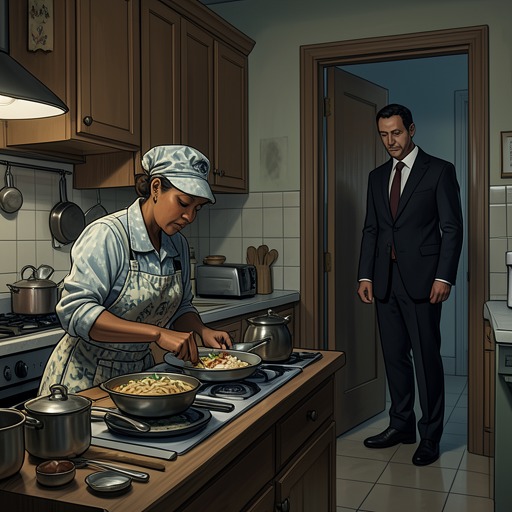
Carol turns the bathroom into a private office. It contains water-warped feminist books and equipment for creating atmosphere, including incense bowls and candles. Frazer likes to look through these things when she is away, while observing that such objects tend to get lost or broken elsewhere in the apartment. The bathroom is therefore both a room in their shared home and a bounded domain she has made her own. The contrast between his casual curiosity and her insistence on privacy gives their marriage a recurring tension: he experiences closeness as familiarity, while she makes room for solitude within that familiarity.
Strain and Concern
Frazer’s account of Carol’s distress also exposes the limits of his understanding. He describes himself as stirred up and unable to concentrate, afraid to leave her alone in the house and unable to imagine what she might be doing. He pictures her running naked down Broadway or passing with her hair on fire, and says he would lock her in if they had the right kind of lock. These are his anxious, comic exaggerations, not evidence that Carol has done either thing. Her sharp objection to being told to calm down cuts through his attempt to narrate the situation at a distance. Frazer’s fondness for her ceaseless account of grievances does not prevent him from misreading what she may be doing or feeling when he is away.
Organizing a Safe House
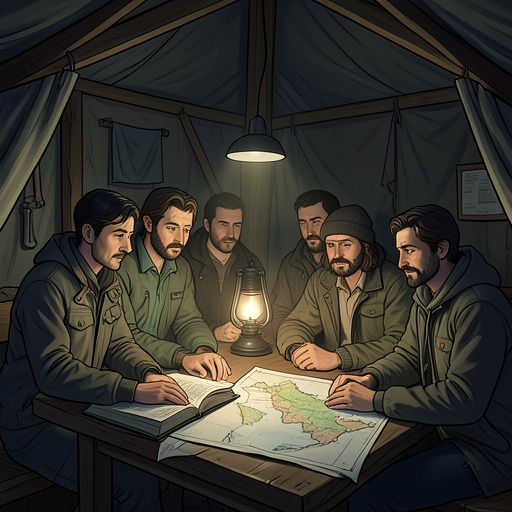
When fugitives require a new place to stay, Carol takes on a concrete part of the arrangements: she rents a safe house, described as an old farm an hour’s drive from Manhattan. Over the following days, the group’s movements are handled through a sequence of car shuttles, moving Pauline first, then Yvonne, and finally Juan. The guns are stored separately among Frazer’s old friends, with Frazer assigning Tom to that task. Carol’s contribution is specific rather than all-encompassing: she secures the house that can shelter the group while other people handle transportation and weapons.
The safe house is approached before dawn by a faint dirt track climbing a grassy slope. Its position gives those inside advance warning of anyone coming from the road. Carol is already outside when Frazer and Jenny arrive, wearing shorts and a large sweater and hugging herself against the cold. The vigil has lasted all night. She tells Frazer she must return to the city for work and demands to know what took them so long. Her frustration is inseparable from the practical burden she has assumed: she has arranged shelter, waited for the arrivals, and still has an obligation beyond the farm.
Reunion with Jenny
Carol greets Jenny with a familiar, worried welcome and embraces her. The reunion is brief, but it gives the safe house a human purpose beyond concealment: it is also a place where Jenny is received by someone who has been waiting for her. Frazer watches the embrace and quickly looks away, leaving Carol and Jenny’s greeting to stand on its own. Carol then asks where the others are. They are finally asleep, after pacing through the house, conducting security checks, and complaining; the newcomers’ vigilance has kept the household in motion through the night.
Across these scenes, Carol’s care appears less as soothing reassurance than as action under pressure. She creates a private room in a crowded home, obtains shelter for people on the run, stays awake for their arrival, and remains answerable to her work in the city. Her anger and impatience are not set against that care; they are part of the same unsentimental presence. The novel shows her through Frazer’s attention, which is affectionate but sometimes anxious and limited, while her own decisions repeatedly shape the material conditions in which other people can live and move.